
Closing Two Chapters of Resilience Work: Shaqodoon Concludes Adkeeysi and EMERGE With Gratitude
Closing Two Chapters With Gratitude
In March 2026, Shaqodoon Organization concluded its role in two of the most significant programmes we have been part of in recent years. Both were Resilience Food Security Activities, both used the Graduation Approach to help extremely poor and marginalized households move toward self-reliance, and both brought together strong consortia working in the parts of Somalia where displacement and food insecurity have been most severe.
The Adkeeysi RFSA was led by Save the Children, with Fondazione AVSI, GREDO, and Shaqodoon as consortium partners. It worked in Daynile District and the Afgoye Corridor, in and around Mogadishu.
The EMERGE RFSA was led by World Vision Somalia, with Tulane University, Elman Peace, and Shaqodoon as consortium partners. It worked in Baidoa and Hudur, in Southwest State.
Together, these two activities targeted some of the largest and most vulnerable populations in Somalia, including internally displaced people, female-headed households, and youth from communities where opportunity has been most constrained.
Before anything else, a heartfelt thank you. To Save the Children, World Vision, AVSI, GREDO, Tulane University, and Elman Peace for the partnership. To the donors, the line ministries, and the local authorities who made this work possible. To the Community-Based Trainers, the camp leaders, the savings group facilitators, and every team member on the ground. And most of all, to the communities in Daynile, the Afgoye Corridor, Baidoa, and Hudur who trusted us with this work. The lessons we carry forward belong to all of you.
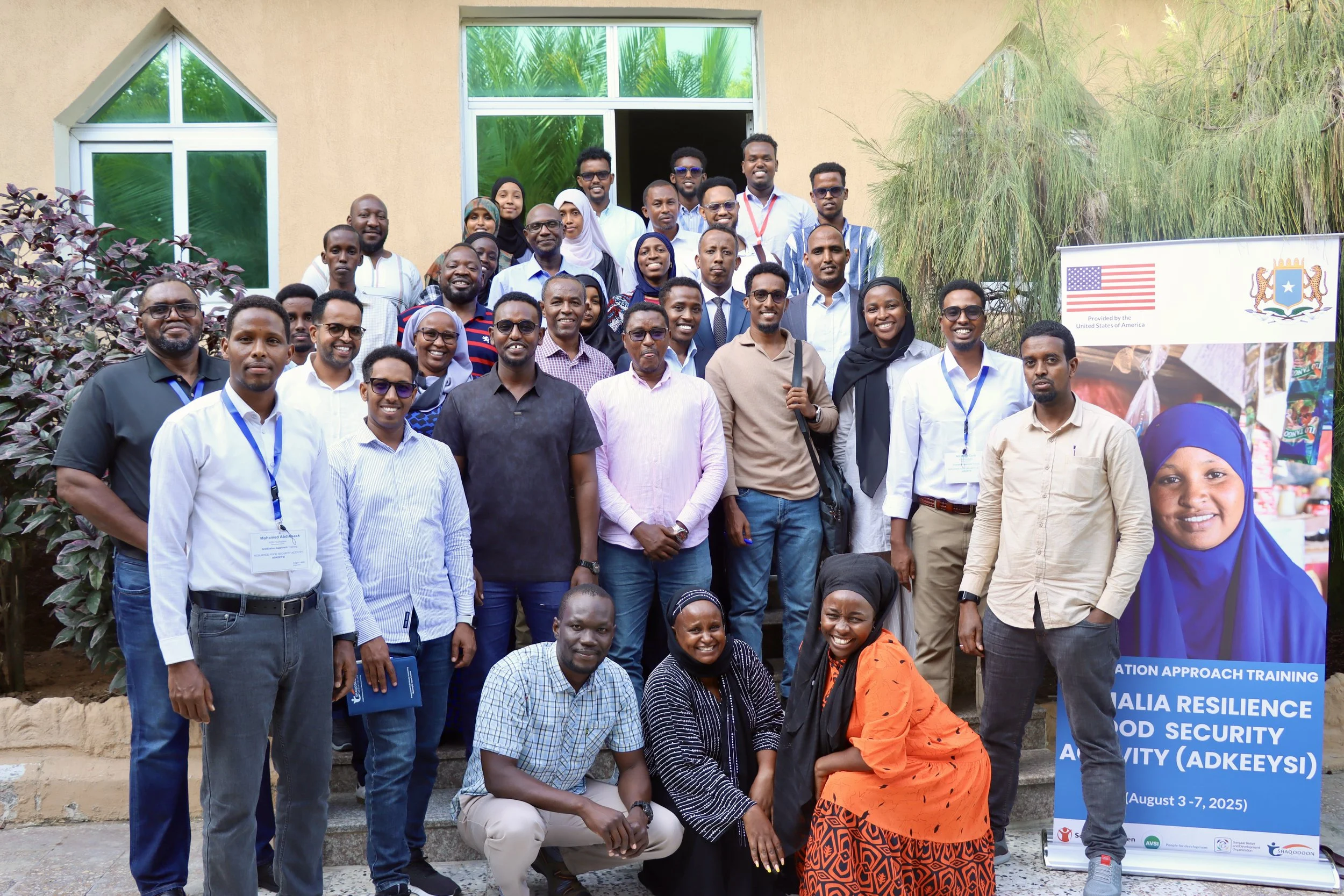
What These Projects Set Out to Do
Both Adkeeysi and EMERGE were built around the Graduation Approach, a structured methodology with strong global evidence. The idea is to help ultra-poor households move out of extreme poverty step by step, by stacking layered components that no single intervention could achieve alone. Cash to stabilize. Coaching to plan. Savings to build discipline. Skills to earn. Productive assets to scale.
The logic is straightforward. You cannot ask a household in extreme poverty to invest in skills training when they do not know where their next meal is coming from. So you sequence the support, building stability first, then capacity, then independence.
Adkeeysi adapted this approach for displacement-affected urban and peri-urban settings in Banaadir, where IDPs, female-headed households, and low-income urban populations face persistent shocks from market volatility, seasonal flooding, and irregular income. EMERGE adapted it for Southwest State, where IDPs and host communities in Baidoa and Hudur face overlapping pressures from displacement, climate, and limited access to skills and markets.
In both contexts, Shaqodoon's role was to bring the technology, the accountability infrastructure, the data, and the digital skills capacity that the graduation model needs to function at scale.
Shaqodoon's Contribution to Adkeeysi
Adkeeysi targeted extremely poor and socially marginalized populations in Daynile District and the Afgoye Corridor, with particular focus on women, youth, and internally displaced persons. Shaqodoon's contribution during the reporting period focused on foundational system building, community engagement, digital inclusion, and evidence generation.
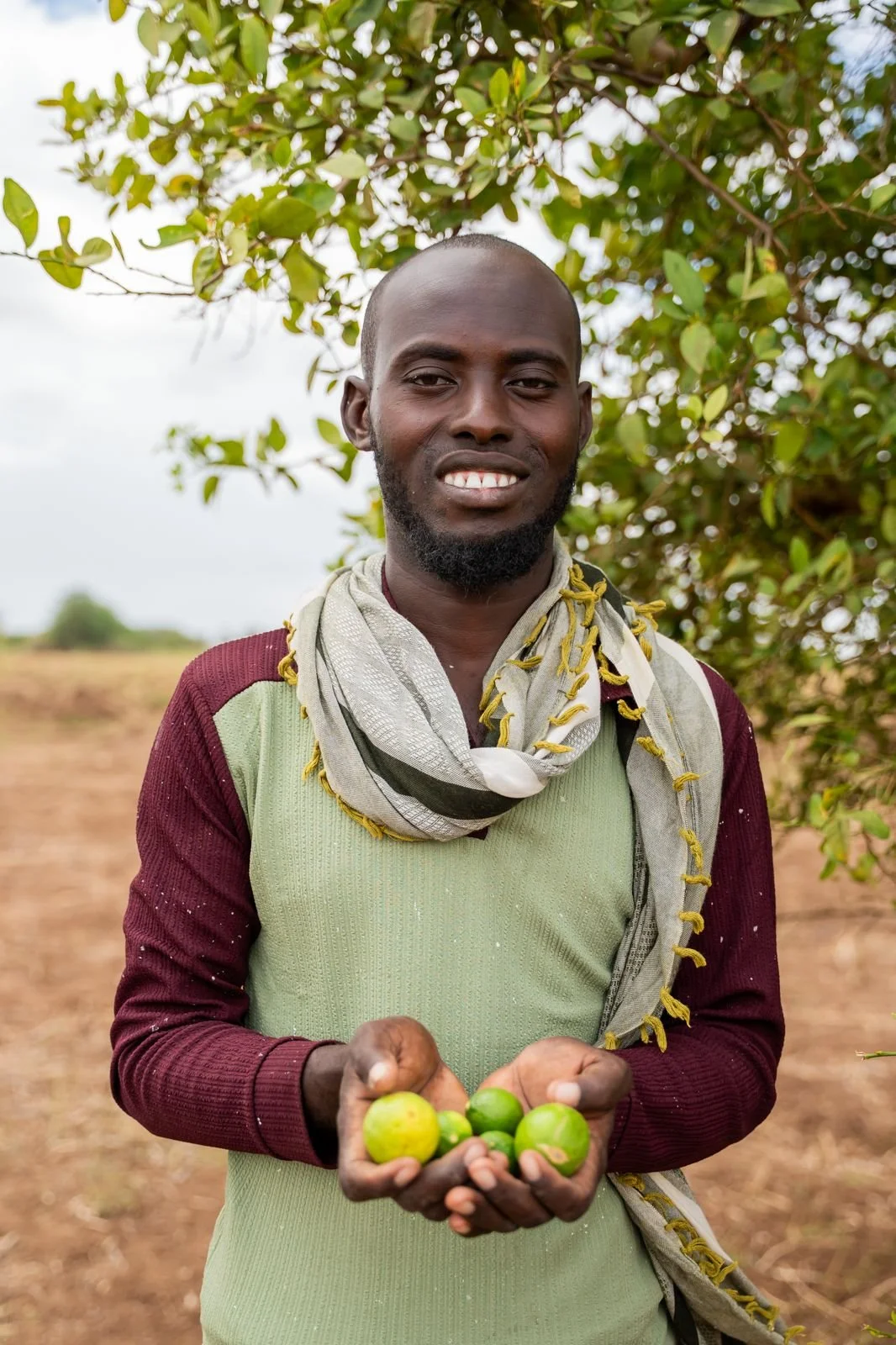
Strengthening community trust and accountability. Shaqodoon led extensive community mobilization and sensitization across IDP settlements and host communities, working directly with camp leaders, community representatives, and Community-Based Trainers (CBTs). The team supported the formation, validation, and orientation of grievance handling and accountability advisory committees, creating community-recognized channels for raising concerns, resolving disputes, and ensuring fair targeting in densely populated displacement contexts.
Building inclusive digital infrastructure. Shaqodoon developed and prepared a voice-based Coaching Platform designed specifically for the realities of Adkeeysi communities, where literacy is low and most households use basic feature phones. The platform delivers weekly voice summaries of coaching and CBT sessions in local dialects, reinforcing learning and creating a two-way channel for beneficiaries to ask questions and provide feedback.
Launching the M-DALAG market information system. One of the standout deliverables of Adkeeysi was M-DALAG, a voice-based market information system built to function on basic mobile phones without internet access. M-DALAG was fully developed during the reporting period, integrated with local telecom providers, and assigned a dedicated shortcode for wide accessibility. Its content focuses on daily market price updates and household food consumption information, helping vulnerable households understand price trends, plan purchases, and make informed consumption decisions.
Mapping the TVET landscape. Shaqodoon completed a comprehensive TVET service mapping across Banadir and Lower Shabelle, generating evidence on the availability and capacity of skills providers, gaps in post-training employment linkages, and opportunities for partnership. The mapping confirmed strong youth and women participation in TVET services and high willingness among private providers to partner with Adkeeysi, and is now informing future training selection and referral pathways.
Supporting financial inclusion through VSLAs. Shaqodoon participated in the distribution of standardized Village Savings and Loan Association (VSLA) kits across Daynile, Garasbaley, and Afgoye, and provided ongoing technical guidance to CBTs on savings group governance and facilitation quality.
Generating evidence through market price monitoring. Throughout the reporting period, Shaqodoon's field-based market monitoring documented sustained increases in staple food prices that consistently outpaced national Consumer Price Index averages. The data showed that imported rice rose by approximately 15 percent between October 2024 and December 2025, vegetable oil by 14 percent, sugar by 10 percent, and red sorghum by over 20 percent in the final quarter alone. This evidence shaped adaptive discussions across the Adkeeysi consortium on consumption support calibration and livelihood strategies, demonstrating the importance of localized intelligence over aggregated national figures.
Shaqodoon's Contribution to EMERGE
EMERGE targeted IDPs and host communities in Baidoa and Hudur, with the same five-component graduation methodology delivered at significant scale. Shaqodoon's contribution focused on accountability systems, climate intelligence, capacity building, and digital skills infrastructure.
Upgrading the accountability and grievance redress system. Shaqodoon redesigned the IVR-based Accountability, Feedback, and Grievance Redress Mechanism into a multi-tenant architecture with a dedicated EMERGE portal, significantly improving system integration, scalability, and responsiveness across the expanded programme.
Reaching beneficiaries through IVR community awareness campaigns. Through the upgraded platform, Shaqodoon delivered two large-scale awareness campaigns to EMERGE beneficiaries:
5,796 beneficiaries reached with World Mental Health Awareness messages in Maay dialect on October 10, 2025
5,775 beneficiaries reached with Aid Diversion awareness messages on November 26, 2025
80 percent call pickup rate demonstrated effective outreach and strong engagement
Operating SAADAAL for Southwest State. Shaqodoon managed the SAADAAL Early Warning System for the Ministry of Humanitarian Affairs and Disaster Management, providing timely alerts on rainfall, floods, and drought risks, and disseminating local market price information to support community preparedness and resilience. SAADAAL was later featured on BBC News for its role in helping small-scale Somali farmers stay one step ahead of climate disasters.
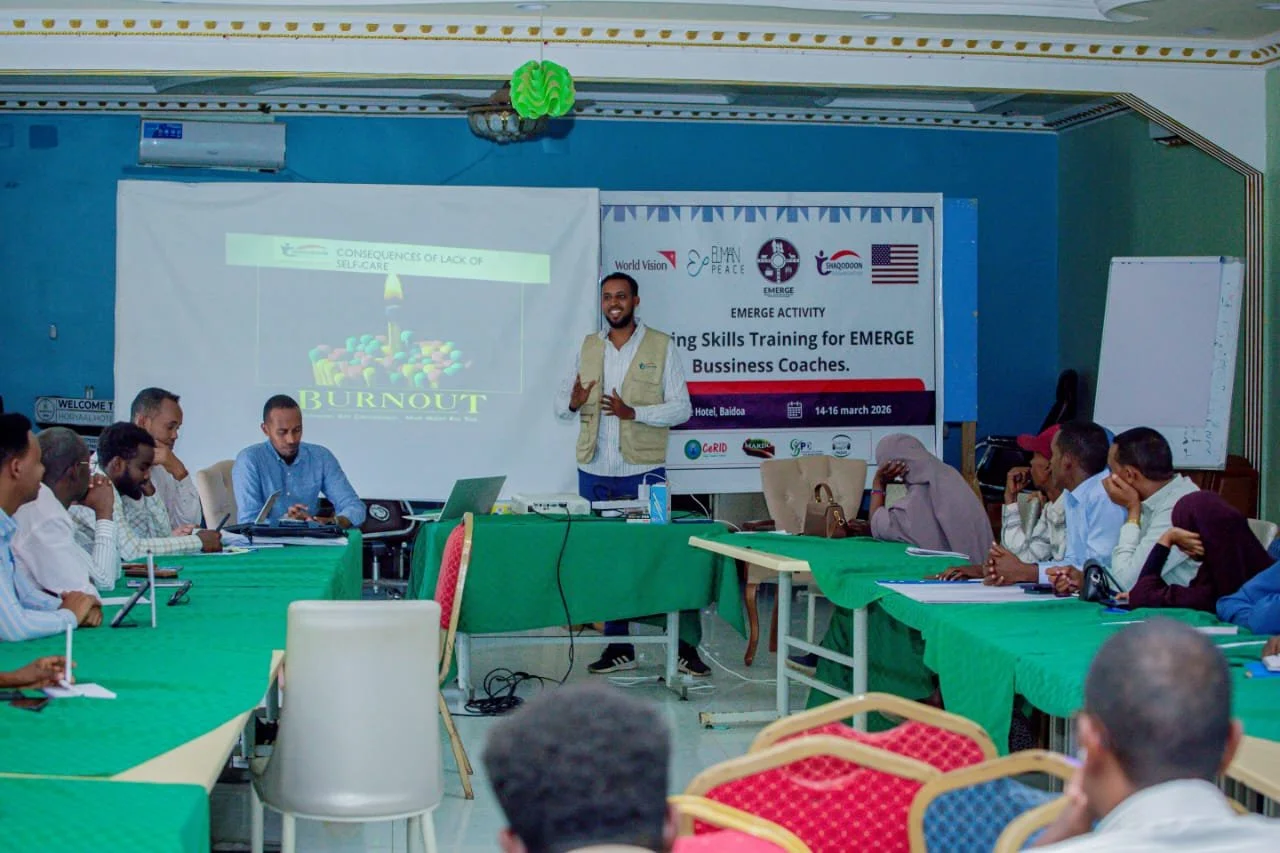
Co-leading TVET coordination and quality assurance. Shaqodoon co-led the establishment of the TVET Working Group with the Ministry of Labor and Social Affairs (MoLSA), World Vision, EPC, and implementing partners. The team supported the development of standardized TVET assessment tools and conducted institutional capacity assessments across six TVET centers, interviewing 31 individuals including 25 instructors and 6 center managers to generate evidence on instructor capacity, certification gaps, and institutional readiness.
Training trainers and coaches at scale. Across the project, Shaqodoon co-facilitated training for the people who would in turn train and coach EMERGE beneficiaries:
55 business coaches trained in financial literacy (41 male, 14 female)
30 partner officers trained in Business Development Services (25 male, 5 female)
66 TVET center managers and instructors trained in Training of Trainers methodologies, with strong gender inclusion (37 male, 29 female)
65 coaches trained in advanced coaching techniques (50 male, 15 female)
Connecting beneficiaries to market opportunities. Shaqodoon mapped and engaged 53 market actors to strengthen private sector linkages, establishing a functional service provider database to support employment and financial linkages for EMERGE beneficiaries.
Transforming the digital curriculum. Shaqodoon upgraded the digital training curriculum into a modular, competency-based system integrating micro-credentials and freelance pathways, increasing its relevance for youth in TVET centers and improving alignment with real labor market demand.
What These Projects Built That Will Outlast Them
Programmes close. The systems and the knowledge they leave behind do not.
The IMAQAL accountability platform, the M-DALAG market information system, the SAADAAL Early Warning System, the voice-based Coaching Platform, the TVET working group infrastructure, the trained business coaches, the trained TVET instructors, the TVET service mapping, the market price monitoring methodology, the consortium relationships built across Save the Children, World Vision, AVSI, GREDO, Tulane, and Elman Peace, all of these continue beyond the closure date.
So do the lessons. That voice-based and low-literacy approaches are not optional in Somali displacement contexts, they are foundational. That community trust is built through visible accountability structures, not announced through messaging. That national inflation figures often understate what households actually face in local markets, and that real-time, localized data is what makes adaptive programming possible. That financial inclusion through VSLAs builds buffers even before livelihoods scale. That system readiness and quality assurance should precede rollout, not follow it.
These lessons will continue to shape Shaqodoon's work across our other portfolios, and we hope they will continue to inform the broader sector as well.
Thank You
To Save the Children, the lead of the Adkeeysi consortium, and to AVSI and GREDO for the partnership. To World Vision Somalia, the lead of the EMERGE consortium, and to Tulane University and Elman Peace for the partnership. To the Ministry of Humanitarian Affairs and Disaster Management of Southwest State, to MoLSA, to EPC, and to every government counterpart who provided direction and support. To the donors who funded this work. To every Community-Based Trainer, every camp leader, every business coach, every facilitator, and every Shaqodoon team member who made the day-to-day delivery possible.
And to the communities in Daynile, the Afgoye Corridor, Baidoa, and Hudur, thank you for the trust. The work belonged to you, and the lessons we carry forward come from you.
Two chapters close. The work continues.